


#1 RealTest Backtests
Supercharge Your Trading Now
Reduce drawdown, build diversification, or speed up your development time.

Used loosely, AI moved the work from research to debugging its own code: broken scripts, missing platform specifics, and RealTest and Python mixed into one file. Four constraints flipped it back. Force single-language output, put a survivorship and look-ahead checklist in the prompt, ask for minimal diffs rather than whole strategies, and keep validation entirely in human hands.

We wanted to see where AI actually saves research time for systematic traders (idea shaping, codes, papers etc) and where it quietly injects curve-fit risk and debugging debt.
Keep that question in mind. Because in practice, we saw both sides and the difference came down to how we used AI.
Hedge funds are all-in. AIMA’s latest survey says 95% of fund managers are already using generative AI and 58% expect to lean on it more for investment processes next year. GPT‑4/ChatGPT is the default pick.

https://www.aima.org/article/press-release-front-office-gen-ai-adoption-shifts-from-if-to-when-for-leading-fund-managers-aima-research-finds.html and https://www.aima.org/article/press-release-getting-in-pole-position-how-hedge-funds-are-leveraging-gen-ai-to-get-ahead.html
Text returns isn’t fantasy. Lopez‑Lira & Tang (2024) show ChatGPT’s news‑headline sentiment had predictive power for next‑day returns in their tests.
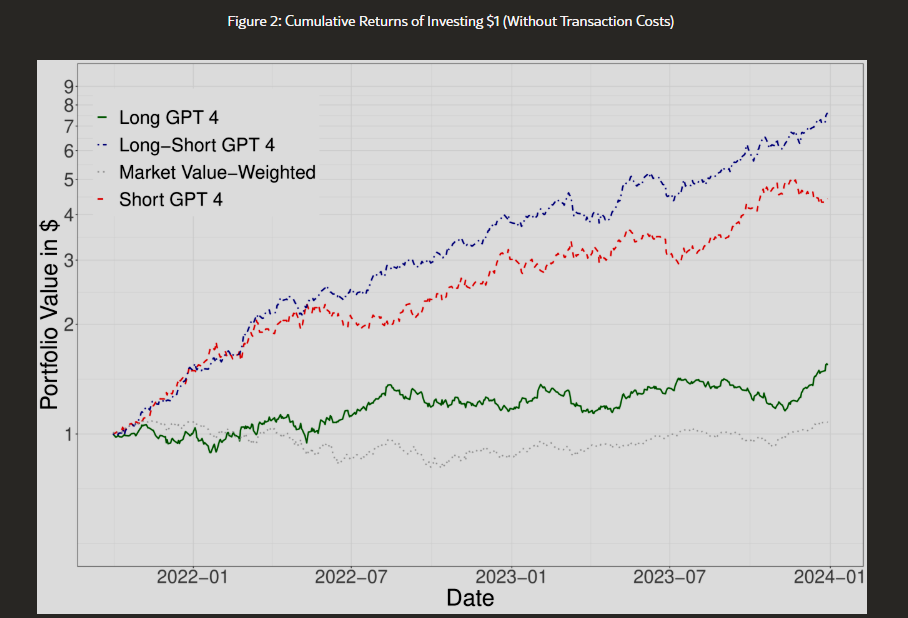
https://arxiv.org/abs/2304.07619
But coding reliability is a pain.
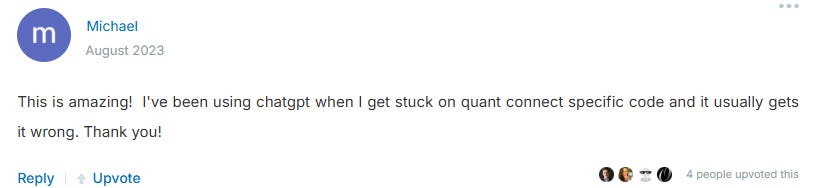
Even QuantConnect launched an in‑platform LLM assistant (Mia) because general LLMs often miss platform‑specific details.
One user comment on their release: “I’ve been using ChatGPT… it usually gets [QC‑specific code] wrong.”
Model choices are diverging. Anthropic launched Claude for Financial Services (long‑context, doc analysis).
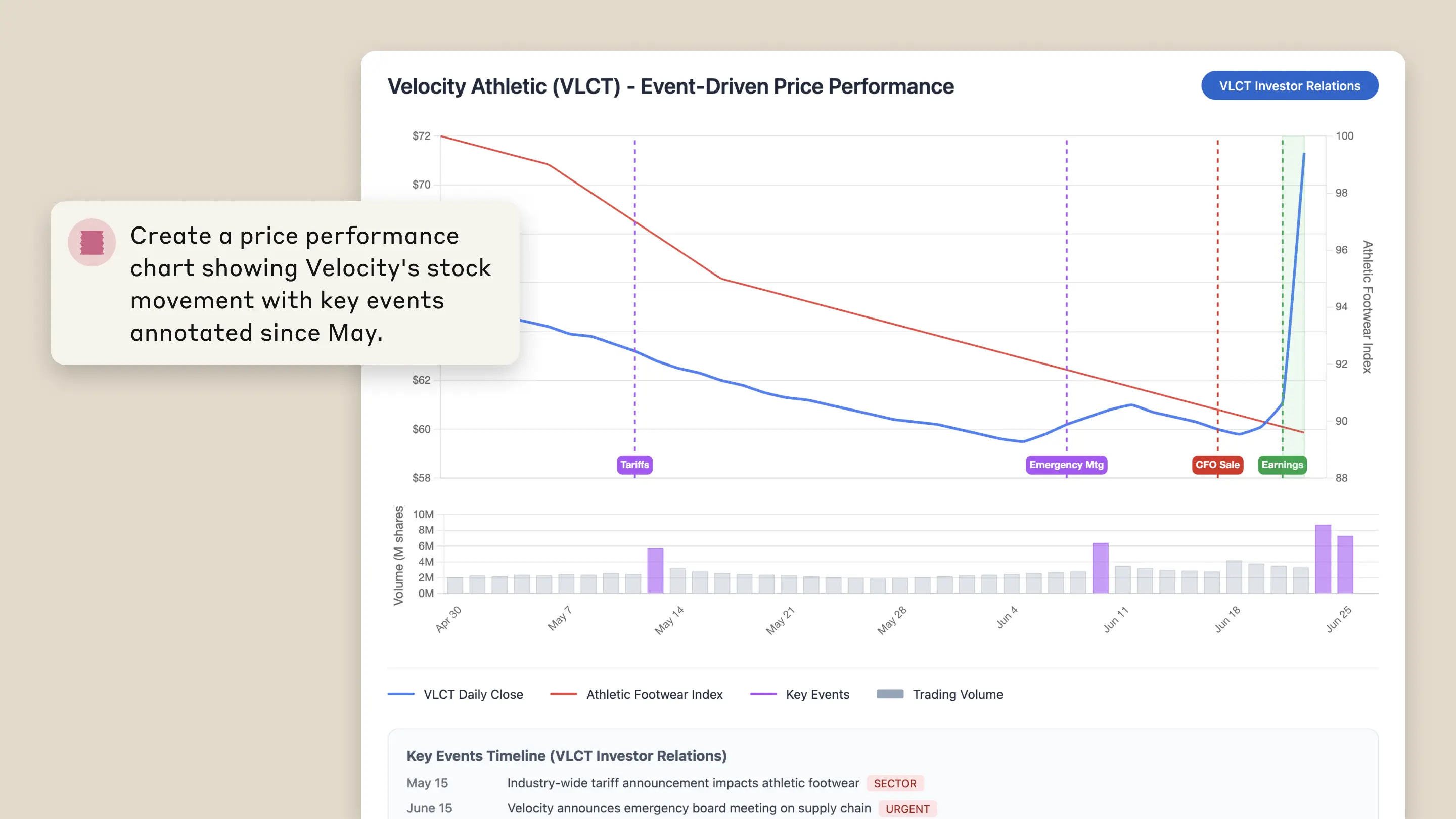
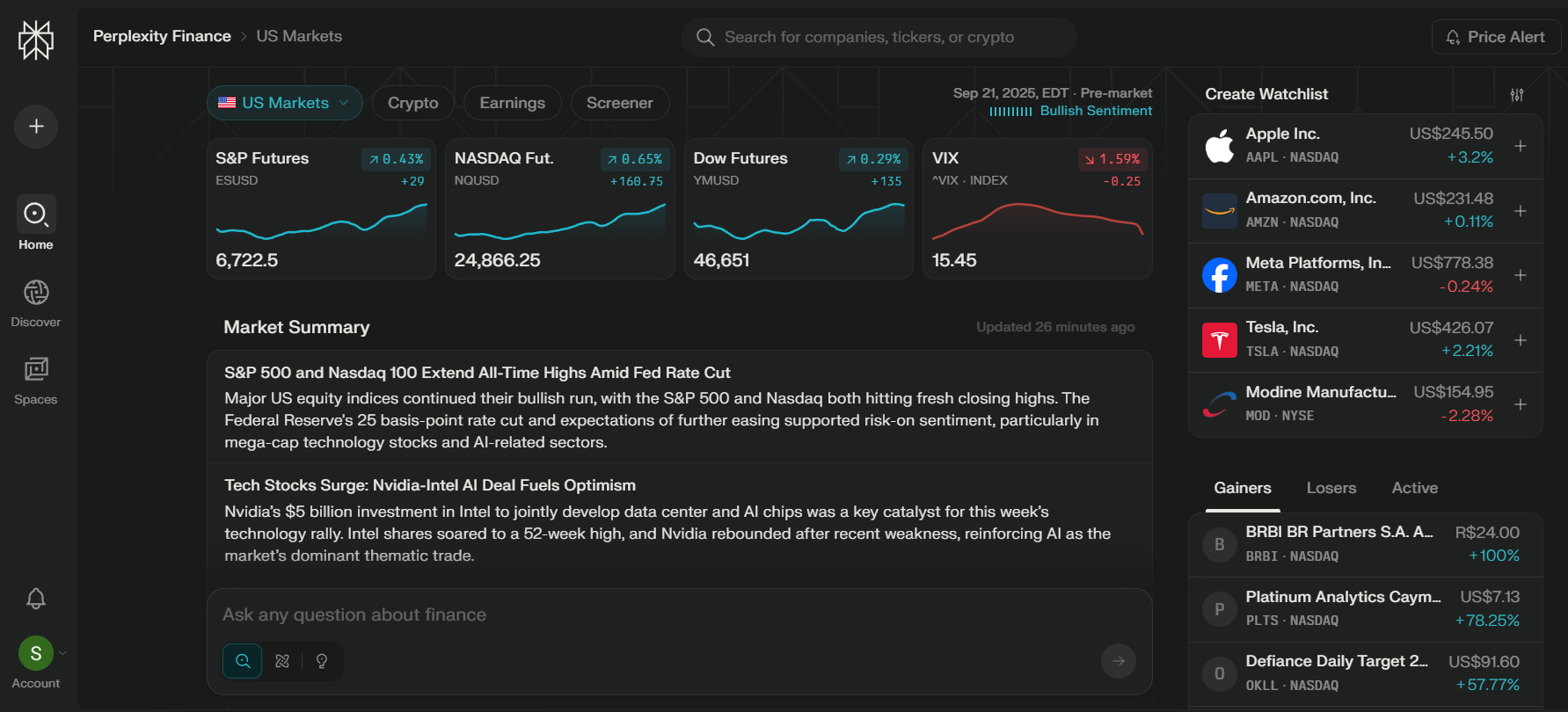
Perplexity grew as a financial research assistant.
A recent write‑up even compared ChatGPT vs DeepSeek on market prediction, with ChatGPT ahead in that test.
But next,, what happened when we used AI in a RealTest workflow ourselves.
We didn’t ask AI to “find alpha.” We asked it to help us work: draft scripts, speed up research, and generate clean variants to test (filters, position sizing, timing). The question: does AI reduce grind time without increasing our error rate?
If AI can shave hours without adding fragility, that’s real value. If it pushes us into debugging rabbit holes, it’s a net negative.

We ran a series of hands‑on trials where we prompted GPT to write or modify RealTest strategies.
What happened, repeatedly:
Sometimes it nailed it. We pasted the AI’s RealTest code and it ran. Huge time saver.
Sometimes it failed hard. The draft wouldn’t run (syntax/logic issues) or missed obvious platform specifics (e.g., index membership filters / survivorship safeguards we always apply).
Sometimes it mixed languages. GPT output RealTest + Python hybrids in one go (e.g., Python functions inside a RealTest block). That broke the flow and sent us into cleanup mode.
Net effect: our role drifted from research/backtesting to debugging AI‑written code, exactly what we didn’t want. We saved time on drafting, then spent it (and more) on fixing.
This matched what the broader community reports: LLMs are amazing at scaffolding, but platform‑specific glue is where they stumble.
Keep this in mind, because in the next section you’ll see how we changed our prompts and process to flip the cost/benefit back in our favor.
These adjustments made AI genuinely helpful and cut the rework:
Single‑language outputs. We now force prompts to return RealTest only (no Python) or Python only never both.
Platform checklists. We keep a mini‑checklist in the prompt: “Use index‑membership filters (avoid survivorship), realistic costs, and no look‑ahead.” AI won’t always obey, but the hit rate improves.
Diff‑based edits. Instead of “write a strategy,” we ask: “Here’s the RealTest script. Propose a minimal diff to add a 200‑day trend filter and position cap.” Less room to hallucinate.
Variant burst, then validate. We let AI generate 3–5 variants (filters/position sizing/timeframes) and then we do the robustness work ourselves: out‑of‑sample splits, parameter sweeps, Monte Carlo on trade sequences, stress periods.
Use specialist tools for research. We use Perplexity for fast research with citations and Claude for long PDF/transcript digestion. Then we decide, in RealTest, what’s worth testing.
Result: AI became a junior quant assistant again, not the driver of our day.
AI saves draft time but increases review time unless you constrain it. The balance flips to positive when you keep outputs narrow and ask for small diffs.
AI won’t fix drawdowns or cure curve fitting. That still comes from discipline: walk‑forward, Monte Carlo, out‑of‑sample.
Where AI shines: idea throughput, documentation, and boilerplate. It’s great at “what if we add X filter?” and at summarizing dense research so you can test the one thing that matters.
Where it hurts: mixed‑language output, platform‑specific misses, and false confidence. If you don’t know what to check, you’ll ship fragile code faster.
The institutional pattern is clear: use AI as co‑pilot, not oracle. Funds are embedding it in research and coding workflows, but humans own validation and risk. (AIMA surveys above; etc)
For RealTest users, that translates to a simple operating rule: Use AI to accelerate. Never to outsource robustness.
That mindset gave us the benefits (speed, breadth) without (hidden bias, broken code, wasted hours).
We wanted to know whether AI actually helps RealTest traders. Our answer, after real trials: yes if you constrain it. Force single‑language outputs, use platform checklists, ask for diffs, and keep your validation gauntlet. Do that, and AI becomes the assistant that lets you test more, learn faster, and keep your equity curves saner.
This is the type of work we do every day at SetupAlpha. Our mission is simple: give RealTest users robust strategies they can trust, without wasted time or curve-fit illusions. If you’re ready to add proven systems to your portfolio, you’ll find them here: https://setupalpha.com/collections/realtest-strategies-and-backtests
AIMA 2025 press release: 95% of fund managers now use GenAI and usage is rising: https://www.aima.org/article/press-release-front-office-gen-ai-adoption-shifts-from-if-to-when-for-leading-fund-managers-aima-research-finds.html
AIMA 2024 survey overview: https://www.aima.org/article/press-release-getting-in-pole-position-how-hedge-funds-are-leveraging-gen-ai-to-get-ahead.html
Federal Reserve: LLMs can classify FOMC minutes topics accurately: https://www.federalreserve.gov/econres/notes/feds-notes/using-generative-ai-models-to-understand-fomc-monetary-policy-discussions-20241206.html
ChatGPT news‑headline sentiment predicts next‑day returns (Lopez‑Lira & Tang): https://arxiv.org/html/2304.07619v5
QuantConnect “Ask Mia” announcement + user feedback: https://www.quantconnect.com/announcements/15995/ask-mia-interactive-ai-llm/ and docs: https://www.quantconnect.com/docs/v2/ai-assistance/mia-chatbot
Claude for Financial Services (document & data analysis workflows): https://www.anthropic.com/news/claude-for-financial-services
MarketWatch summary: ChatGPT vs DeepSeek market‑prediction study: https://www.marketwatch.com/story/a-chinese-paper-finds-chatgpt-not-deepseek-can-generate-stock-market-returns-but-the-key-insight-doesnt-have-anything-to-do-with-ai-ae3c9e5f
It helps with throughput rather than with edge. In these trials it was genuinely useful for drafting scripts, generating variants to test and summarising research, but unconstrained use moved the day from research into debugging AI-written code. The benefit only appeared once the output was tightly constrained.
Sometimes, and unreliably. In repeated trials some drafts pasted in and ran, while others failed on syntax or logic, skipped platform specifics such as index membership filters, or returned RealTest and Python mixed together in one block. Reviewing the output takes the place of writing it.
AIMA's survey puts it at 95% of fund managers already using generative AI, with 58% expecting to rely on it more for investment processes in the following year. The institutional pattern is AI as co-pilot inside research and coding workflows, with humans keeping validation and risk.
There is published evidence for a narrow version of this. Lopez-Lira and Tang (2024) found that ChatGPT's sentiment scoring of news headlines carried predictive power for next-day returns in their tests. That is a signal extracted from text, not a strategy, and it still needs the usual validation.
Mixed-language output that will not run, missed platform specifics such as survivorship safeguards, and false confidence. The last one matters most: if you do not already know what to check, AI lets you ship fragile code faster than you could before.
Four rules made the difference here. Demand one language per response. Include a checklist in the prompt covering index membership filters, realistic costs and no look-ahead. Ask for a minimal diff to an existing script instead of a new strategy. Then generate three to five variants and validate them yourself.
Because platform-specific glue is exactly where their training is thinnest. Models scaffold well and then miss the conventions of a specific engine. QuantConnect launched its own in-platform assistant for this reason, and the same gap shows up with RealTest.
No. Curve fitting and drawdown are handled by walk-forward testing, out-of-sample splits, parameter sweeps and Monte Carlo on trade sequences. AI can produce more candidates to put through that process, which is useful, but it does not replace any step of it.
Idea throughput, documentation and boilerplate. It is good at answering what happens if a given filter is added, and at digesting dense research so that only the testable claim is left. The decision about what is worth testing, and the testing itself, stay with the trader.